
In a class component you extend ReactPureComponent instead of ReactComponent and in a functional component you wrap your function in the higher-order function Reactmemo. The return function displays the UI code that is usually a JSX expression or raw HTML code.

Convert Your Class Component To A Functional One With React Hooks Coding Camp Components Keep It Cleaner
A quick skim through the documentation shows that there are two types Function Components and Class Components.

React class component to function component. In older versions of React the state used to be defined in the constructor. It is a valid React component because you can pass props into it. Function Welcomeprops return Hello propsname.
Converting React Class Components to Function Components using Hooks 9th of March 2019 With React Hooks now being part of the stable release lets take a look at how to convert a class-based React component to a Function component including state usage and life cycle methods. Functional components are literally simple JavaScript functions as shown above. This function is a valid React component because it accepts a single props which stands for properties object argument with data and returns a React element.
There are several ways to make sure functions have access to component attributes like thisprops and thisstate depending on which syntax and build steps you are using. How do I bind a function to a component instance. Class-Based Component First lets take a look at the current ClassBasedFormjs component located in the components folder.
Hooks are a new addition in React 168. If you write a function component and realize you need to add some state to it previously you had to convert it to a class component. They let you use state and other React features without writing a class.
Class components are ES6 classes and Functional Components are functions. Function and Class Components The simplest way to define a component is to write a JavaScript function. Now lets convert it to a functional component using the useState Hook.
Why convert a class component to a function component. State Dealing with state in class and functional components are not too different. Join millions of learners from around the world already learning on Udemy.
However you should be careful when applying this pattern because maybe you can solve the problem a different way. Ad Learn how to build Native Apps for iOS Android with React Native and Redux. So you must know their usage concept in detail with some examples.
If you work with React frequently this should all look pretty standard. This is how a functional component looks. Pure components created this way in React are cached based on their props and inner state values.
The only constraint for a functional component is to accept props as an argument and return valid JSX. Their purpose is to return a single React element and they do so in different ways. The class component needs to extend the React Component class and must specify a render method.
Here I have explained everything of components in react. Sometimes you should use Class Components and while other times Function Components are better for the job. Convert Class Components to Functional Components in a React Project Solution to Code Challenge 14 Last week on the code challenge we set out to refactor some class components in a create-react-app project to functional components using react hooks.
The most important part is probably understanding the difference between the setState method in class components and setter methods in functional components. React Class Components offered the possibility to decide whether a component has to rerender or not. The difference is pretty obvious.
But its really all there is to it. Basics of React Functional Components vs Class Components. A React Function Component force update can be done by using this neat trick.
Ad Learn how to build Native Apps for iOS Android with React Native and Redux. Pure React Function Component. Functions and class components are.
Join millions of learners from around the world already learning on Udemy. Start by creating a class that extends ReactComponent Using the constructor we initialize the state and add a binding to use the method toggleVisibility inside the render method. Functional components accept props as the only argument so.
If you need to have access to the parent component in the handler you also need to bind the function to the component instance see below. In the above example for functional components we use hooks useState to manage state. Reacts js provides a Function component and class component that are very important for creating a user-friendly single-page web application.
React class component convert to functional component Antdesign. Whereas the function component is simply a function and the render method is simply the return value of the function. Class Components and Functional Components.
First we need to know exactly what were talking about when we say function components and class components.

Pin On React Js

Pin On React Js

Pin On Reactjs

Pin On React Js

How To Use React Higher Order Components Components Being Used New Class

How To Convert React Class Components To Functional Components With React Hooks Digitalocean Class App Converter Class

Pin On Web Dev

14 48react Pass Props To A Stateless Functional Component Learn Freec
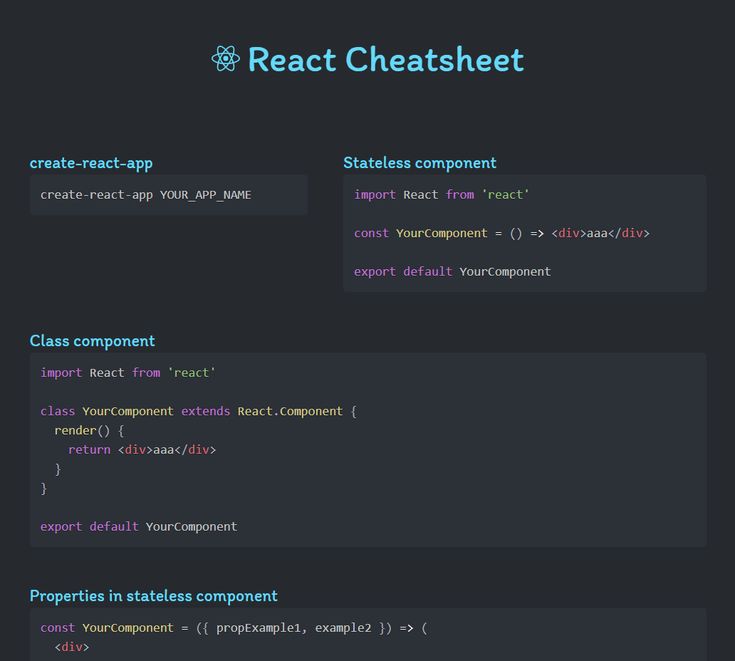
A Cheat Sheet For React Javascript Cheat Sheet Learn Web Development Cheat Sheets

Pin On Reactjs

Pin On React Js

Pin On Reactjs Tutorials

1 State In React Component Tutorialswebsite Components Call Parents Tutorial

React Stateless Functional Components Nine Wins You Might Have Overlooked Coding Camp Components Deep Learning

Pin On React Js

Chapter 3 Understanding Reactjs Components Reactjs Tech Diagonal Understanding React App Chapter

A Complete Beginner S Guide To React Freecodecamp Org

Pin On React Native App Development Solutions


0 Comments